FAQs on Food Plots
What animals can a good food plot attract?
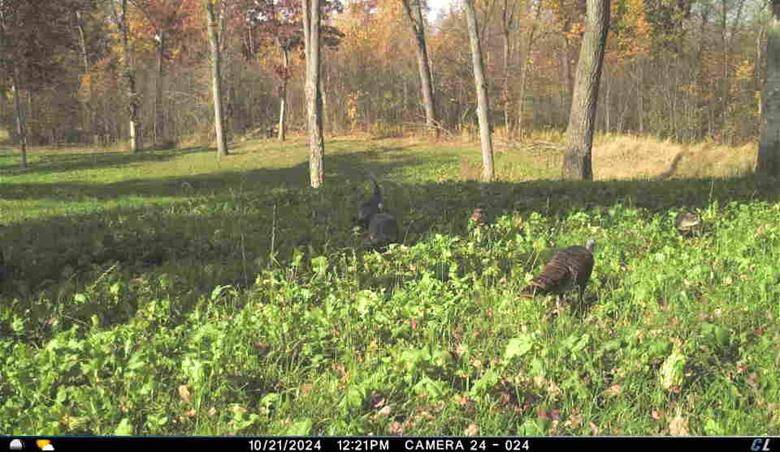
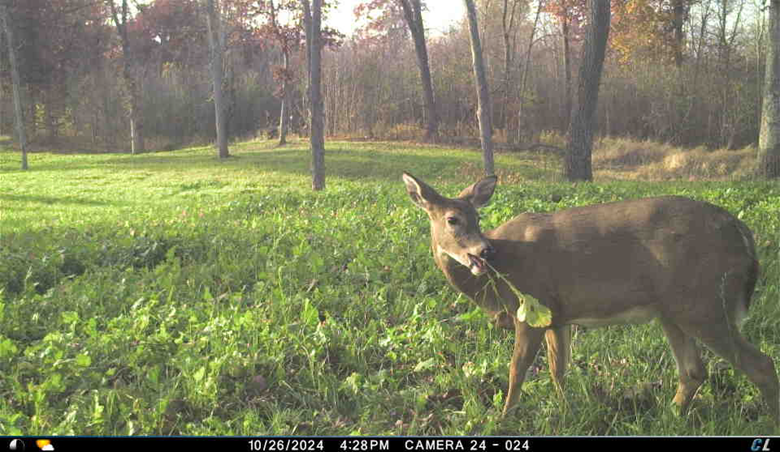
Whitetail deer, bear, moose, rabbit, woodchuck, wild turkey, and grouse all love a good food plot.
Beyond those mainstays, the specific species a plot attracts depends heavily on what’s planted. If your goal is to attract whitetail deer, corn, alfalfa, and clover are effective. Plantings such as buckwheat, sunflowers, and sorghum can attract more game animals. Browntop and white proso millet are great for attracting several duck species.
A well-designed food plot can also attract pollinators (birds and butterflies), along with songbirds. It can create or enhance a whole micro-ecosystem.
What rules or regulations dictate food plots in Minnesota?
Minnesota’s regulations center on the distinction between “baiting” (which is illegal) and legitimate food plots (which are legal). The Minnesota DNR states that:
Hunters are not allowed to take deer with the aid or use of bait anywhere in Minnesota….Bait includes grains, fruits, vegetables, nuts, hay, or other food that is capable of attracting or enticing deer and has been placed by a person….Agricultural crops from normal or accepted farming, forest management, wildlife food plantings, orchard management, or other similar land management activities are not bait.
There is an important nuance:
This exclusion does not apply to agricultural crops that have been reintroduced and concentrated where a person is hunting. Example: a person may spread an abundant agricultural crop on a previously planted field as fertilizer. However, if the fertilizer is piled or concentrated where the person is hunting deer, it is baiting.
Additionally, CWD (Chronic Wasting Disease) feeding bans affect certain counties. Feeding and attractant bans are in place across the state to prevent concentrations of wild deer in areas with a higher risk of disease. Minnesota counties with a can on deer feeding and attractant include: Aitkin, Anoka, Beltrami, Carver, Cass, Clay, Crow Wing, Dakota, Dodge, Fillmore, Goodhue, Hennepin, Houston, Hubbard, Itasca, Le Sueur, Mower, Norman, Olmsted, Polk, Ramsey, Rice, Scott, Sherburne, Sibley, Steele, Traverse, Wabasha, Washington, Wilkin, Winona, and Wright. However, the DNR notes that food placed as a result of normal agricultural practices is generally exempt from the feeding ban.
How Large Are Most Food Plots in Minnesota?
The Minnesota DNR’s own guidance on northern Minnesota food plots recommends keeping them modest: two to four acres total within a 40-acre area is sufficient, and several smaller plots are better than one large plot. Irregular edges and shapes are best.
More general guidance from wildlife agencies and experts nationally (applicable to Minnesota conditions) suggests: ideal plot sizes are 1/4 to 1 acre for small game plots, 1–5 acres for deer and turkey, and 5–20 acres for dove and geese.
In general, a minimum plot size of 1/4 acre should typically be used wherever food is needed, even on the smallest of parcels. As parcel size approaches 40 acres within a coverless agricultural region, 2–3% of your total acreage in food plots is a good rough estimate without overdoing it.
For more forested Minnesota landscapes, smaller plots are common — and on small tracts (300 acres or less), 1 plot per 80 acres is about right, while on mid-sized tracts (300 to 1,000 acres), 1 plot per 160 acres works well.
What are some popular features of food plots?
Beyond the crops themselves, well-designed food plots incorporate several intentional features:
- Shape: More unorthodox shapes such as J, K, L, U, V, W, Y, field goal, hourglass, turkey foot, and other unique shapes are much better than simple rectangles. These make it so that deer can’t see the entire food plot from one location, and they commonly travel to the vertexes (bends) to see other parts of it — making those vertexes excellent stand locations.
- Proximity to cover: The plot should ideally be long and narrow, providing multiple edges next to cover. This layout gives turkeys (and deer) a sense of security while they feed. It’s also crucial to choose a spot that receives adequate sunlight — most food plot mixes require a minimum of six hours of direct sun to thrive.
- Diverse plant mixes: Layering plant types — combining cool-season annuals like oats, wheat, and brassicas with perennials like clover or chicory — extends forage availability into spring and also provides structure and cover for other species.
- Screening cover: Many hunters add visual barriers (native grasses, shrubs, hinge-cut trees) around plot edges to make wildlife feel safer entering during daylight hours.
- Soil health: Soil testing, liming, and fertilizing are hallmarks of quality plots — a soil sample will tell you how much lime and fertilizer you need, guide you in choosing the right seeds, and ensure you don’t waste resources.
What makes some food plots more effective than others?
Several factors separate thriving food plots from bare patches of dirt:
- Location: There are a few common components to successful plots: sunlight, well-drained soil, and sunlight. Proximity to bedding areas also matters greatly.
- Soil prep: For example, if soil pH is around 4.5, close to 80% of the money you spend on fertilizer is wasted. Getting pH right is critical.
- Minimizing hunting pressure: Large exposed production feeding plots may not be as effective for daytime usage because deer feel exposed. Smaller, enclosed plots near cover often see more daylight activity.
- Plant diversity and timing: Deer gorge on high-protein feeds in spring and summer, but rely on high-carbohydrate food sources in fall and winter — so plots that provide the right nutrition at the right time outperform single-crop plots.
- Seed-to-soil contact: Proper soil preparation to ensure seeds germinate is critical and often overlooked by beginners.
Besides for hunting, why else might you want a food plot?
There are several compelling non-hunting-related reasons to establish a food plot:
- Wildlife viewing and photography: Whether you’re a hunter hoping to attract big game or a wildlife enthusiast wanting to encourage birds and small mammals to utilize your land, a well-placed plot can concentrate activity in areas that are convenient and safe for observation.
- Conservation and stewardship: The value of food plots extends well beyond benefits for hunting. Working with the land instills a land ethic and leads to more holistic habitat management practices.
- Emergency wildlife nutrition: Food plots can serve as supplemental or emergency food supplies during extreme cold or snow in winter months, or may help wildlife get ready for winter. They can also assure that wildlife species have adequate food supplies in the spring and summer months for reproduction and raising their young of the year.
- Enjoyment and habitat gardening: Some landowners plant food plots or native grasses near homes or cabins to enjoy seeing songbirds and butterflies.
- Pollinator support: Well-designed plots with flowering legumes, clovers, and wildflowers actively benefit bee and butterfly populations, which have broader ecological value.
- Protecting crops: Food plots have also been used, with varying degrees of success, to attract wildlife away from valuable cash crops. For example, some farmers have planted buckwheat between forested areas and soybeans — deer eat the buckwheat and have less of a negative impact on the soybeans.